Podcast
6 avr. 2026
Unpacking the "Wild West" of Dance Data: Why Verification Matters
Jamie Hodgins discusses dancer verification, media protection, and why trusted identities are essential in today's dance industry.

Podcast
6 avr. 2026
Jamie Hodgins discusses dancer verification, media protection, and why trusted identities are essential in today's dance industry.
In an April 2026 episode of Dance Studio Advertising, host Bryce Conlin sat down with ICDR Executive Director Jamie Hodgins to tackle a critical issue impacting every corner of the competitive dance industry: how dancer information, media, and participant records are managed and protected.
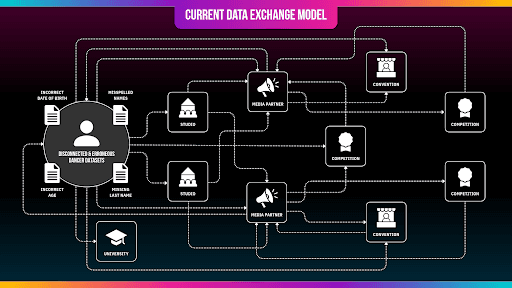
During the conversation, Jamie described the current competitive dance landscape as the "Wild West" of dance data. Currently, studios, competitions, media providers, and families operate across disconnected systems. Because these platforms rarely communicate, sensitive dancer information is frequently entered, transferred, and stored in multiple locations with limited verification and inconsistent privacy protections.
A significant portion of the discussion focused on competition media and the challenges families face when trying to securely access performance photos and videos. Jamie explained that many traditional media redemption processes rely on basic personal details–such as names, studio affiliations, or birthdate–to grant access. While these systems were built for convenience, they create security vulnerabilities if that personal information is entered incorrectly or publicly available.
ICDR addresses these vulnerabilities through verified guardianship. By verifying a parent or guardian’s identity and securely linking them to a dancer profile, ICDR ensures that media access is strictly tied to a verified individual, rather than data that can be easily obtained elsewhere. To ensure these vital safeguards are accessible to everyone, ICDR’s baseline protections are entirely free, reinforcing the philosophy that digital safety is a right, not a privilege, and removing barriers for every participating family.
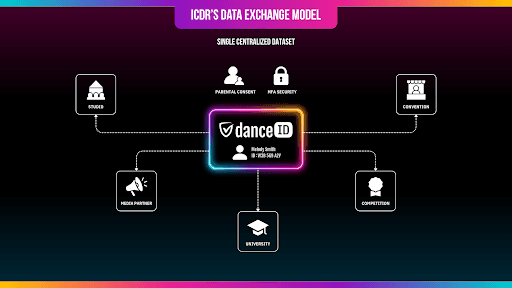
Importantly, ICDR does not store competition photos or videos. Instead, it serves as an independent verification layer that integrates with existing industry platforms and media providers, including technology partners like DanceBUG.
As Jamie summarized "We're not a registration system, we're not a competition, we're not a governing body. We're essentially the identity layer."
The conversation highlighted the growing importance of legal privacy compliance within the dance community. Jamie referenced several major established privacy frameworks, including:
PIPEDA (Personal Information Protection and Electronic Documents Act)
GDPR (General Data Protection Regulation)
BIPA (Biometric Information Privacy Act)
COPPA (Children's Online Privacy Protection Act)
He noted that modern families increasingly expect these robust legal safeguards to apply to their personal information and digital media.
Historically, competitive dance has relied on self-reported participant information for ages and competitive levels. While the vast majority of studios and families work hard to ensure accuracy, the industry has lacked a consistent method for verifying this data across different organizations. ICDR's approach introduces a standardized verification method, creating greater confidence in shared information and fostering a more transparent competitive experience.
Bryce and Jamie also explored how this technology can actively save time for studio owners. Instead of forcing staff to repeatedly type and submit the same student information across multiple separate competition systems, a verified identity framework allows trusted data to move efficiently between participating organizations while strictly maintaining privacy safeguards.
While ICDR’s immediate focus remains on verification, guardianship, and media protection, Jamie shared a long-term vision of helping dancers build permanent, verified records of achievement.. This same structural foundation could one day be used to securely track verified accomplishments, technical examinations, and major milestones throughout a dancer's entire journey.
Ultimately, Jamie emphasized that this initiative is not about control. It is about creating stronger protections, improving industry trust, and providing families, studios and competitions with modern tools that meet today's digital privacy expectations.
Listen to the full episode here.